
If you are planning mongolia tours and searching for an authentic cultural experience that goes beyond landscapes and temples, few things immerse you deeper into nomadic life than sipping a bowl of Airag. This mildly fermented mare's milk has been central to Mongolian identity for thousands of years, and tasting it is a rite of passage for every curious traveler. Whether you are a seasoned adventurer or a first-time visitor to the steppe, understanding Airag will enrich your journey in ways that no museum exhibit can replicate.
What Is Airag?
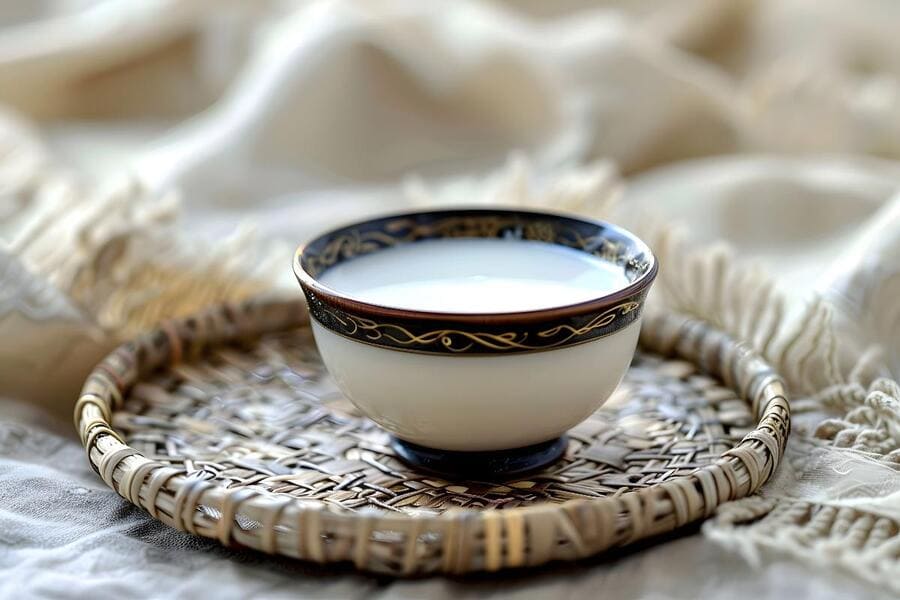
Airag (pronounced "eye-rag") is a lightly fermented alcoholic beverage made from the raw milk of mares, the female horse. It is the national drink of Mongolia and holds an irreplaceable place in the country's food culture and social traditions. The drink is pale white, slightly fizzy, tangy in taste, and carries a mild alcoholic content that typically ranges between 1% and 3% alcohol by volume, though older batches can reach up to 7%.
The flavor profile of Airag surprises many first-time tasters. It is simultaneously sour and refreshing, not unlike a thin, fizzy yogurt drink with an earthy undertone. The texture is thinner than milk, and the light carbonation gives it a lively finish on the palate. For Mongolians, it is a source of nourishment, a social offering, and a cultural symbol all at once.
The History of Airag in Mongolia
The history of Airag stretches back over 5,000 years, making it one of the oldest fermented beverages in human civilization. Archaeological evidence from Central Asian burial sites and ancient pottery residues confirms that the nomadic peoples of the Eurasian steppes were fermenting mare's milk long before many other cultures developed their own fermented drinks.
For the Mongol Empire under Genghis Khan, Airag was more than a beverage. It was a strategic resource. Warriors carried it on long campaigns as a lightweight, nutritious drink that could sustain them across vast distances. Historical accounts from travelers like Marco Polo describe it as a drink of the noble and the warrior classes alike.
Over centuries, as Mongolia's nomadic herding culture persisted while empires rose and fell, Airag remained a constant thread in the social fabric. Today it continues to be produced by herding families using techniques passed down through generations, making it a living piece of intangible cultural heritage.
How Airag Is Made
The production of Airag is a meticulous, labor-intensive process that reflects the deep knowledge Mongolian herders hold about their animals and their environment. Every step, from milking to fermentation, is guided by tradition and refined through practice.
Collecting Mare's Milk
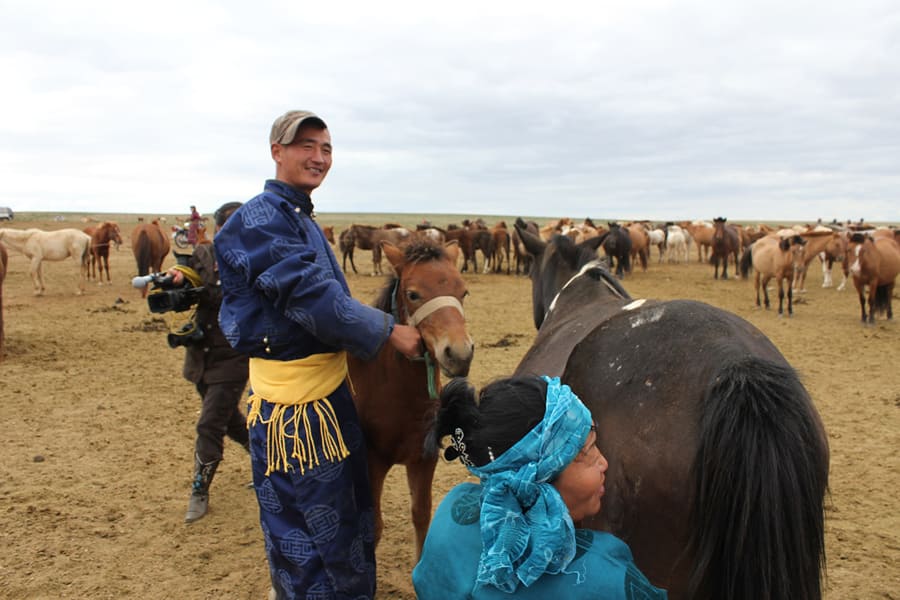
The process begins in late spring and runs through summer, the season when mares produce the most milk. Mongolian herders typically milk their mares between 6 and 8 times per day, collecting small amounts each time. This is only possible once the foal has been allowed to nurse briefly, stimulating milk production. A single mare produces roughly 1 to 1.5 liters of milk per milking session, making the collective effort of a herding family essential to gather enough for fermentation.
The milk itself is naturally rich in lactose, vitamins, and minerals. Unlike cow or goat milk, mare's milk has a composition closer to human breast milk, with lower fat content and higher sugar levels, which makes it particularly well-suited for the fermentation process.
The Traditional Fermentation Process
Once collected, the fresh mare's milk is poured into a large traditional container and combined with a starter culture, which is typically a portion of previously fermented Airag. This ensures that the right strains of lactic acid bacteria and yeasts are present to drive fermentation. The mixture is then churned repeatedly using a long wooden paddle called a "buluur." Mongolian tradition holds that Airag must be stirred thousands of times over the fermentation period, and herder families often take turns throughout the day to maintain the rhythm.
Fermentation typically takes one to three days depending on temperature and the desired level of acidity and alcohol. Warmer conditions accelerate the process. The result is a lightly carbonated, tart, and mildly alcoholic drink that is strained before serving.
Tools and Containers Used for Making Airag
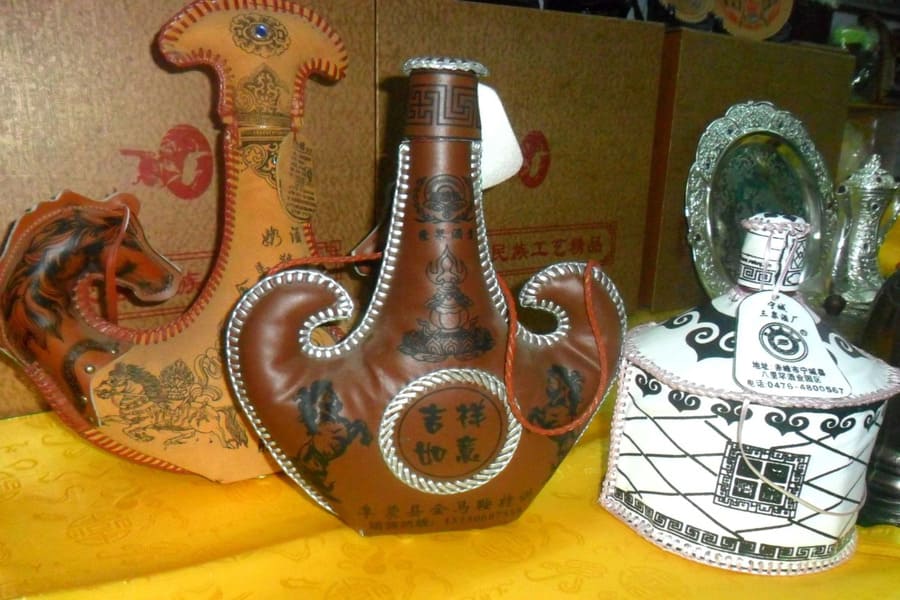
Traditionally, Airag is fermented in a vessel made from horse or cattle hide called a "khokhuur" or in a large wooden barrel. The hide sack is prized because its porous surface retains beneficial bacterial cultures from previous batches, essentially acting as a living fermentation vessel. Over the years, the inner surface of an old khokhuur develops a rich microbial environment that gives Airag from experienced herders its distinctive depth of flavor.
In more modern settings, some families use large plastic barrels or food-grade containers, though traditionalists insist the leather vessel produces a superior product. The wooden churning paddle is still universally preferred, as it aerates the mixture in a way that plastic tools cannot replicate.
Health Benefits and Nutritional Value of Airag
Beyond its cultural significance, Airag has attracted scientific attention for its nutritional profile and potential health benefits. Mongolian herders have long understood its restorative properties intuitively, and modern research is beginning to validate many of these traditional claims.
Probiotics and Digestive Benefits
The fermentation process that produces Airag generates a diverse community of lactic acid bacteria, including species from the Lactobacillus and Leuconostoc families. These are the same genera of beneficial bacteria found in yogurt and kefir. Consuming Airag regularly introduces these live cultures into the digestive tract, where they can support a healthy gut microbiome, improve digestion of lactose, and potentially strengthen immune function. Many travelers who struggle with digestive issues in unfamiliar food environments report that Airag, consumed in moderate amounts, settles the stomach rather than disrupting it.
Vitamins and Nutrients Found in Kumis
Kumis, which is the term most widely used in Central Asian and international contexts to describe fermented mare's milk equivalent to Airag, is notably rich in B vitamins, particularly B1 (thiamine), B2 (riboflavin), B6, and B12. It also contains vitamin C at levels higher than most other fermented dairy products, which historically made it a valuable dietary supplement for nomadic populations living through long winters with limited access to fresh produce.
In terms of minerals, kumis provides calcium, phosphorus, and magnesium. Its protein content is moderate but highly bioavailable. The low fat content compared to cow's milk makes it lighter on the digestive system while still providing meaningful caloric energy.
Common Health Claims and Scientific Perspectives
Mongolian and Russian traditional medicine has historically recommended Airag and kumis for the treatment of tuberculosis, anemia, gastrointestinal disorders, and general fatigue. Several sanatoriums in Russia and Kazakhstan were devoted to "kumiss therapy" as late as the 20th century.
Modern scientific reviews are cautiously supportive. Studies published in food science and nutrition journals note the probiotic potential and favorable amino acid profiles of fermented mare's milk. However, researchers also caution that the alcohol content, while low, is still present, and large amounts should be avoided by pregnant women, children, and individuals with alcohol sensitivities. The overall scientific consensus is that moderate consumption of Airag is safe and potentially beneficial for healthy adults.
When and Where to Drink Airag in Mongolia
Timing and location matter when seeking out the freshest, most authentic Airag experience.
Best Season to Try Fresh Airag
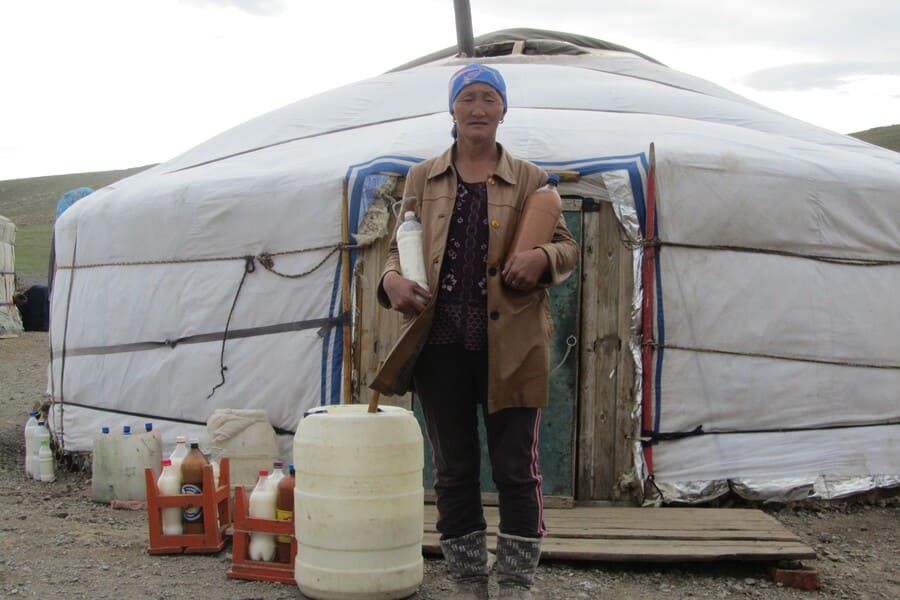
The peak season for Airag runs from June through September. This window aligns with the mares' lactation period and the long, warm days of the Mongolian summer that favor fermentation. Fresh Airag produced in July and August is widely considered the finest, with a perfect balance of tartness and subtle sweetness. By late autumn, production winds down as mares are weaned and herders prepare for the harsh winter months. Visiting outside this window dramatically reduces your chances of finding fresh, high-quality Airag.
Experiencing Airag in a Nomadic Ger Camp
The most memorable way to enjoy Airag is to be invited into a nomadic family's ger (traditional felt tent) on the open steppe. When you arrive as a guest, the host family will almost certainly offer you a bowl of Airag as the first gesture of hospitality. This offering holds deep social meaning. Refusing it outright is considered impolite, though hosts generally understand that foreign visitors may be hesitant. Even a small sip, taken respectfully with both hands or the right hand supported by the left, communicates appreciation and goodwill.
Many organized ger camps and eco-tourism operators in areas like the Orkhon Valley and Hustai National Park include Airag tasting as part of their cultural programs, making it accessible even for travelers without direct connections to herding families.
Regions Famous for Producing Airag
While Airag is produced across Mongolia wherever horses are herded, certain regions have reputations for exceptional quality. The Orkhon Valley, a UNESCO World Heritage Site in central Mongolia, is widely regarded as one of the heartlands of Airag production. The rich pasturelands support large horse herds, and herding families in this area have centuries of accumulated expertise. The Arkhangai and Bayankhongor provinces are also known for producing especially flavorful batches due to the quality of local grasslands and the traditional knowledge of resident herder communities.
Price of Airag
Airag is one of the most affordable beverages you will encounter in Mongolia. When purchased directly from herding families or at rural markets, a liter of fresh Airag typically costs between 500 and 1,500 Mongolian tögrög, which is roughly equivalent to USD 0.15 to 0.45. At Naadam festival grounds or tourist-oriented markets in Ulaanbaatar, prices may be slightly higher, ranging from 1,000 to 3,000 tögrög per liter or per bowl.
Some upscale restaurants and hotels in Ulaanbaatar offer bottled or chilled Airag at premium prices as part of curated tasting menus, where a small serving might cost the equivalent of a few US dollars. Even so, Airag remains an exceptionally accessible cultural experience that does not require a significant budget.
Airag Etiquette: How to Drink It Respectfully
Understanding the customs around Airag is just as important as tasting it. Mongolian hospitality is built on specific rituals, and knowing how to receive Airag gracefully will earn you genuine respect from your hosts.
Traditional Serving Customs
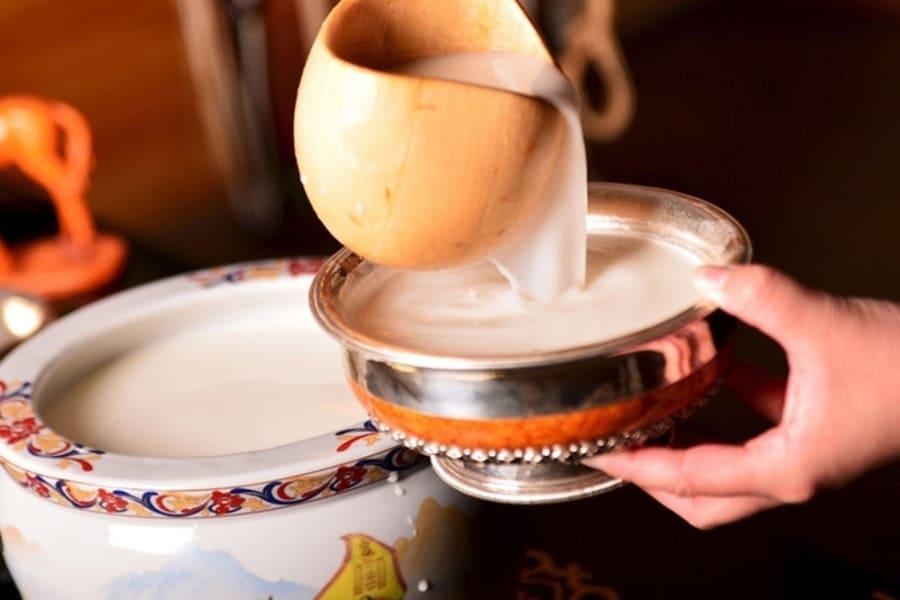
Airag is traditionally served in a "piyala," a shallow, wide bowl that allows the drinker to take in the aroma before sipping. The host fills the bowl and offers it with both hands or the right hand, often with a slight bow. The guest is expected to receive the bowl with both hands or the right hand supported by the left, never with the left hand alone, which is considered disrespectful.
After receiving the bowl, it is customary to dip the ring finger of the right hand into the Airag and flick a few drops in each direction: once toward the sky, once toward the ground, and once in each of the cardinal directions. This gesture is a brief offering to the spirits of the sky, earth, and the four directions, rooted in shamanistic tradition. Even if you are not familiar with the spiritual significance, performing this gesture shows cultural awareness and respect.
Dos and Don'ts When Offered Airag
Do accept the bowl with both hands and take at least a small sip, even if you are uncertain about the taste. Returning an untouched bowl is a significant social slight. Do offer a compliment, even through a smile or a nod, as hosts take pride in the quality of their Airag. Do feel comfortable asking for a refill if you enjoy it, as this is a genuine compliment.
Do not refuse completely without explanation. If you have genuine dietary restrictions or health concerns, communicating this politely through a guide or gesture will generally be understood. Do not hold the bowl with your left hand alone. Do not pour away or discard Airag in front of your hosts. And do not add anything to the Airag such as sweetener or ice, as this would be seen as disrespectful to the traditional preparation.
Frequently Asked Questions About Airag
Is Airag Alcoholic?
Yes, Airag contains alcohol, but the level is low. Most freshly fermented batches contain between 1% and 3% alcohol by volume, similar to a very light beer. Older or more vigorously fermented batches can reach up to 7% ABV. Because of this, Airag is generally consumed freely by adults, though children, pregnant women, and those avoiding alcohol should be aware of its content.
What Is the Difference Between Airag and Kumis?
Airag and kumis refer to essentially the same product: fermented mare's milk. The difference is primarily linguistic and geographic. Airag is the Mongolian term, while kumis (also spelled koumiss or qymyz) is the term used in Turkic-speaking cultures of Central Asia, including Kazakhstan, Kyrgyzstan, and Bashkortostan in Russia. The production methods, base ingredient, and general characteristics are nearly identical, though subtle regional variations in starter cultures, fermentation time, and horse breeds result in slight differences in flavor between Mongolian Airag and Central Asian kumis.
Can You Buy Airag Outside Mongolia?
Fresh Airag is extremely difficult to find outside Mongolia due to its short shelf life, the need for active fermentation cultures, and the limited availability of mare's milk in most parts of the world. Some specialty stores in Russia, Kazakhstan, and a handful of Central Asian communities in Europe carry bottled kumis, which is the closest widely available equivalent. A small number of artisanal producers in France and Germany have begun producing fermented mare's milk products, but these remain niche items. If you want authentic Airag, visiting Mongolia during the summer season is truly the only reliable way to experience it.
Why Is Airag Important in Mongolian Culture?
Airag is important in Mongolian culture for reasons that extend far beyond nutrition. It is a symbol of the bond between Mongolians and their horses, an animal that has been central to nomadic life, warfare, trade, and identity for millennia. Airag is served at every major life event, from births and weddings to funerals and the Naadam national festival. Offering Airag to a guest is one of the most fundamental expressions of Mongolian hospitality and generosity. The process of making it connects herder families to their ancestors and to the rhythms of the natural world. In a country where modernization is rapidly changing daily life, Airag endures as a powerful link to the nomadic heritage that defines Mongolian cultural identity.

