
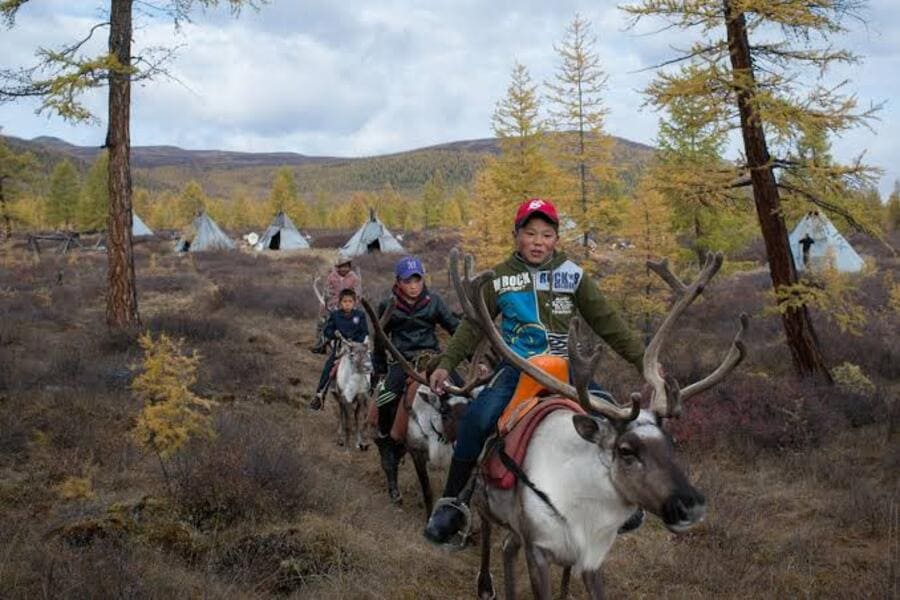
Few travel experiences in the world compare to trekking into the remote taiga forests of northern Mongolia to meet one of the last surviving nomadic reindeer-herding cultures on earth. The Mongolia reindeer tribe, known as the Tsaatan (or Dukha), has lived in deep symbiosis with their reindeer for thousands of years, migrating with the seasons across some of the most rugged and beautiful terrain in Central Asia. For adventurous travelers seeking authentic cultural immersion through well-crafted Mongolia tours, a visit to the Tsaatan is nothing short of life-changing. This guide covers everything you need to know before you go, from understanding who these people are to how to reach them responsibly.
Who Are the Mongolia Reindeer Tribe?
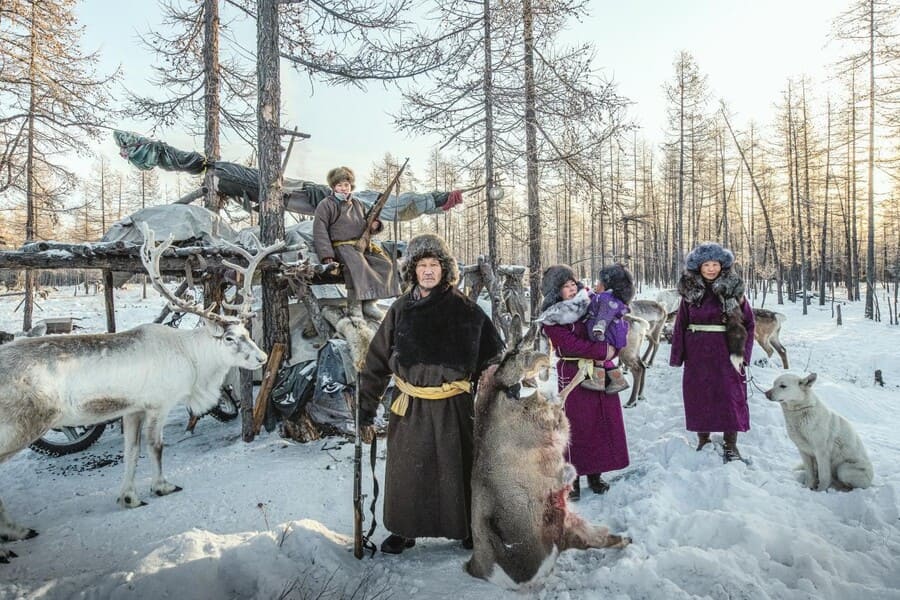
The Tsaatan people are a small Turkic-speaking ethnic group who have inhabited the subarctic taiga forests of northern Mongolia for centuries, possibly millennia. The word "Tsaatan" literally translates from Mongolian as "those who have reindeer," a name that perfectly captures the heart of their identity. Today, only around 40 to 44 families remain, making them one of the smallest and most endangered indigenous groups in the world.
Unlike the broader Mongolian Reindeer tribe communities found across Siberia and Scandinavia, the Tsaatan are uniquely tied to the Mongolian taiga. Their survival, culture, and spiritual worldview are inseparable from the reindeer they tend. These are not animals kept for food or mass production. The Tsaatan rely on reindeer for milk, transportation, light labor, and ceremonial purposes. The relationship is deeply reciprocal and profoundly spiritual.
What makes the Tsaatan especially remarkable is their resilience. Despite decades of Soviet-era collectivization policies that tried to push them toward sedentary farming, and ongoing pressure from modernization, many Tsaatan families have chosen to continue their traditional way of life deep in the forest, far from roads, electricity, and the conveniences of the modern world.
Understanding Mongolia's Nomadic Reindeer Tribes
Daily Life of Mongolia Reindeer Herders
Daily life for the Tsaatan revolves entirely around the rhythm of the taiga and the needs of their reindeer herds. Families typically own between 5 and 20 reindeer, each of which is known individually by name and temperament. Mornings begin before sunrise with milking the reindeer, a task shared by men, women, and older children. The milk is rich and nutritious, consumed fresh or fermented into a mildly sour drink similar to yogurt.
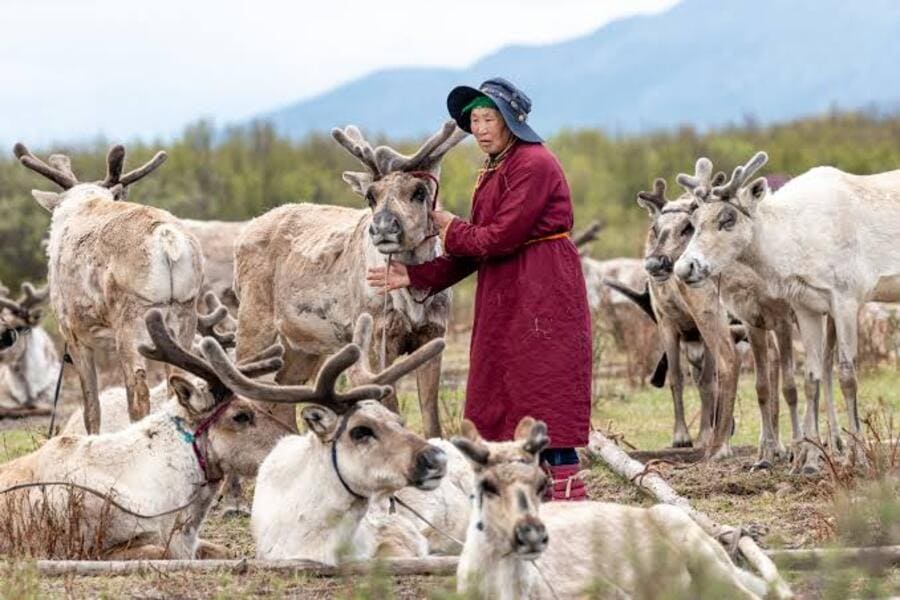
Throughout the day, Mongolia reindeer herders monitor their animals, gather firewood, prepare food, and maintain their ortz (tipi-style tents). Children often accompany adults on horseback or on foot as part of their education, learning the landscape, the behavior of animals, and the practical skills needed for survival in the taiga. Evenings are quieter, spent near the fire, sometimes accompanied by storytelling or the playing of traditional instruments.
Traditional Livelihood and Reindeer Herding
The Tsaatan migrate between two to five times per year, following the reindeer to fresh grazing grounds and avoiding the heat of lower elevations in summer. Their reindeer are not the large, domesticated caribou of Lapland. They are smaller, hardier animals well-adapted to the cold and the forest terrain.
Reindeer are used as pack animals to carry the ortz poles, cooking equipment, and personal belongings during migrations. This practical function is essential in terrain where no roads exist. Some Tsaatan families also supplement their income through guiding, handicraft sales, and carefully managed tourism, though the latter remains a sensitive and complex topic within the community.
Cultural Beliefs and Shamanic Traditions
Among Mongolia's nomadic reindeer tribes, shamanism is not a relic of the past. It is a living practice that remains central to Tsaatan identity and community health. Tsaatan shamans, called boo (for male) or udgan (for female), serve as intermediaries between the human world and the spirit world. They conduct healing ceremonies, communicate with ancestral spirits, and guide the community through important decisions.
Shamanic rituals often involve elaborate costumes adorned with metal ornaments, feathers, and animal skins. The drum is the shaman's most important instrument, used to enter trance states during ceremonies. While outsiders are sometimes permitted to witness these rituals, it is essential to approach them with deep respect and only when formally invited. Photographing sacred ceremonies without explicit permission is considered a serious violation of trust.
Where to Find the Reindeer Tribe in Mongolia
The Taiga Region of Northern Mongolia
The Tsaatan live in the Khuvsgul Province of northern Mongolia, specifically in the taiga zone that borders Russia to the north. This region is characterized by dense boreal forests, fast-running rivers, and high alpine meadows. The landscape is stunning in every season, from the wildflower-carpeted meadows of summer to the crystalline snowfields of winter.
The taiga sits at elevations between 2,000 and 2,600 meters, and the climate can shift quickly. Summers are short and cool, with temperatures averaging 10 to 15 degrees Celsius. Winters are brutally cold, regularly dropping below minus 40 degrees Celsius, a fact that underscores the extraordinary hardiness of the Tsaatan people and their reindeer.
Tsagaannuur Village – The Main Gateway
The small village of Tsagaannuur (also spelled Tsagaan Nuur) is the primary starting point for any journey to visit the reindeer tribe in Mongolia. Located in the far northwestern corner of Khuvsgul Province, Tsagaannuur has a basic guesthouse, a small market, and a district government office. It is the last outpost of road-accessible civilization before you enter the taiga on horseback.
Most responsible tour operators arrange for guides and horses in Tsagaannuur. It is also the place where you can register your visit with the local authorities, which is required before entering the taiga. The village has a significant Tsaatan population, and many families of herders spend periods of time here, particularly in winter, making it possible to meet community members before the trek begins.
Eastern Taiga vs. Western Taiga
The Tsaatan are divided into two main groups: the Eastern Taiga community and the Western Taiga community. Both groups maintain their traditional lifestyle, but they inhabit different parts of the forest and have slightly different patterns of seasonal migration.
The Eastern Taiga is more commonly visited and is generally more accessible, requiring a horseback ride of one to three days from Tsagaannuur depending on where the families have camped. The Western Taiga is more remote and requires a longer journey. Some travelers specifically choose the Western Taiga for its greater sense of solitude and the reduced impact of tourism on the community. Discuss the options carefully with your guide or tour operator before committing to a route.
Best Time to Visit the Mongolia Reindeer Tribe
The best time to visit is generally from late June through early September. During these months, the taiga trails are passable on horseback, the rivers are fordable, and the weather, while unpredictable, is manageable for most travelers. The landscape is lush and green, wildflowers are in bloom, and the longer daylight hours give you more time to explore and connect with your hosts.
July is particularly popular, as the Naadam Festival takes place in Ulaanbaatar earlier in the month, allowing travelers to combine two distinct Mongolian cultural experiences in a single trip.
Spring (April and May) and early autumn (September and October) are also viable, particularly for experienced trekkers comfortable with cold temperatures and the possibility of snow. Winter visits are possible but are reserved for serious adventurers or researchers, as temperatures are extreme and travel conditions are hazardous.
Avoid the mud season in late May and early June, when snowmelt makes the taiga trails impassable and river crossings dangerous.
How to Reach the Mongolia Reindeer Tribe
Traveling from Ulaanbaatar to Khuvsgul Province
The journey begins in Mongolia's capital, Ulaanbaatar. From there, you have two options for reaching Khuvsgul Province: flying or overland travel. The domestic airline Hunnu Air operates flights between Ulaanbaatar and Murun (the provincial capital of Khuvsgul), reducing what would otherwise be a 14 to 20-hour overland journey to a 90-minute flight. Flights are the preferred option for most travelers and are worth booking well in advance during peak season.
If you choose to travel overland, shared minivans (microbuses) depart from the Dragon Bus Terminal in Ulaanbaatar. The journey is long and rough but offers stunning scenery across the central Mongolian steppe.
Getting to Tsagaannuur
From Murun, the journey to Tsagaannuur takes an additional 8 to 10 hours by shared jeep or hired 4WD vehicle, covering approximately 180 kilometers of partially unpaved road. The road passes through beautiful countryside, and the final section before Tsagaannuur crosses rolling hills and river valleys that signal you are entering a truly remote part of the world.
Hiring a private vehicle from Murun is recommended over waiting for shared transport. Your tour operator in Ulaanbaatar can typically arrange this, ensuring the driver knows the route and the roads are appropriate for the vehicle being used.
Horseback Trekking into the Taiga
Once in Tsagaannuur, the only way to reach the Tsaatan camps is on horseback or on foot. The horse trek into the taiga is itself a memorable experience, taking you through birch and pine forests, across open meadows, and over streams swollen with glacial meltwater. The journey typically takes one to three days each way, depending on where the families are camped at the time.
Horses and local guides are arranged through reputable operators in Tsagaannuur or through your tour company in advance. Riding experience is helpful but not strictly required, as Mongolian horses are generally calm and well-suited to beginners. However, be prepared for long days in the saddle and the physical demands of high-altitude trekking.
What to Expect When Visiting a Reindeer Tribe in Mongolia
Staying in Traditional Tipi Tents
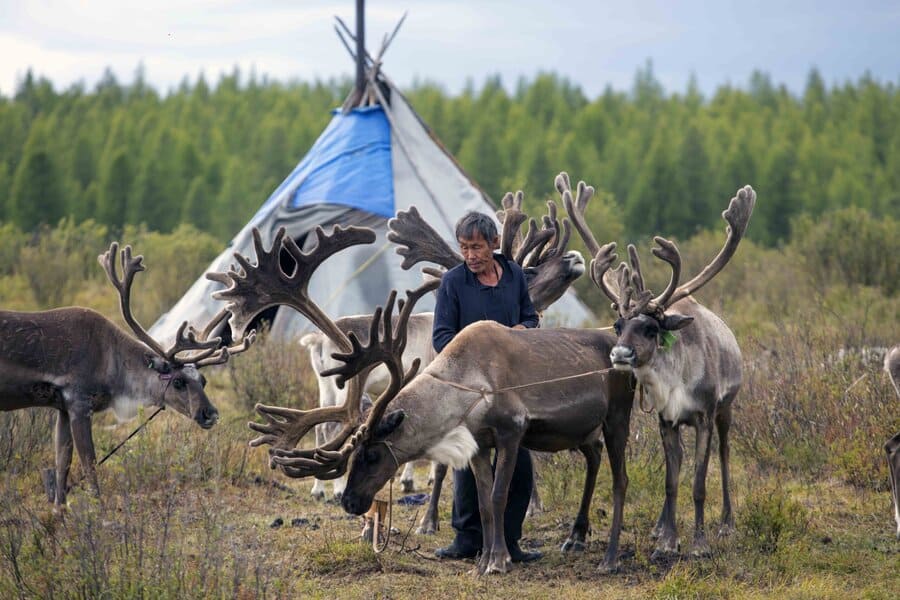
The Tsaatan do not live in the circular gers (yurts) used by Mongolia's steppe nomads. Instead, they live in ortz, which are conical tipi-style structures made from birch poles covered with canvas or animal hides. The ortz is compact and efficient, quick to assemble during migrations, and well-suited to the dense forest environment where long poles are readily available.
Visitors typically sleep in their own tent or, in some cases, are invited to share space in a family's ortz. Sleeping conditions are basic: expect a sleeping mat, heavy blankets, and the warmth of a central wood-burning stove. Nights in the taiga are cold even in summer, so proper sleeping bags and layering gear are essential.
Meeting Reindeer Herders and Their Families
The Tsaatan are known for their quiet dignity and measured hospitality. Meetings often begin with tea, followed by simple food such as reindeer milk porridge, dried meat, or flatbreads. Communication can be a challenge since the Tsaatan speak their own Turkic dialect, distinct from standard Mongolian, and very few speak English. A bilingual local guide who speaks both Tsaatan and Mongolian (and ideally some English) is absolutely essential for meaningful interaction.
Take time to observe before participating. Watch how families interact with their reindeer, how they prepare food, and how they organize their camp. These quiet observations often yield more genuine understanding than rushed conversations.
Participating in Daily Activities
Many families welcome visitors to join in daily tasks. You may find yourself helping to gather firewood, learning to milk a reindeer under patient instruction, or assisting with the preparation of a meal. These participatory moments are where the most authentic connections are made and where the reality of life in the taiga truly sinks in.
Bringing small practical gifts such as tea, sugar, flour, or quality rope is a well-established and appreciated custom. Avoid giving candy to children or items that could create dependency. Consult your tour operator for the most current guidance on appropriate and respectful contributions.
Reindeer Riding and Photography Opportunities
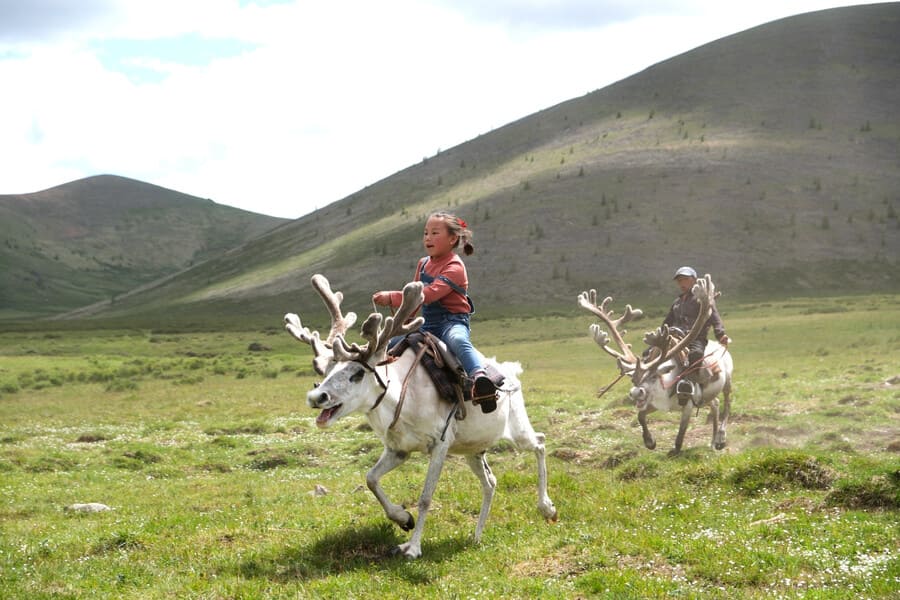
One of the most iconic aspects of a visit to the Mongolian Reindeer tribe is the opportunity to ride a reindeer. Unlike horseback riding, reindeer are ridden with a small saddle positioned at the shoulders rather than the back. The experience is gentle and often magical, particularly in the soft light of the taiga morning.
Photography opportunities are extraordinary, from wide landscape shots of camps framed by ancient forest to intimate portraits of herders and their animals. Always ask for permission before photographing individuals, particularly shamans, elderly community members, and children. A skilled local guide can help navigate these moments with sensitivity and respect, ensuring your visit leaves a positive impression rather than an intrusive one.
Visiting the Mongolia reindeer tribe is a journey that demands patience, physical resilience, and a genuine willingness to engage with a way of life radically different from anything most travelers have ever encountered. For those who make the effort, the reward is an experience of profound human connection, extraordinary natural beauty, and a humbling perspective on what it means to live in true harmony with the natural world. Plan carefully, travel responsibly, and approach the Tsaatan with the respect and curiosity their remarkable culture deserves.

